 Save
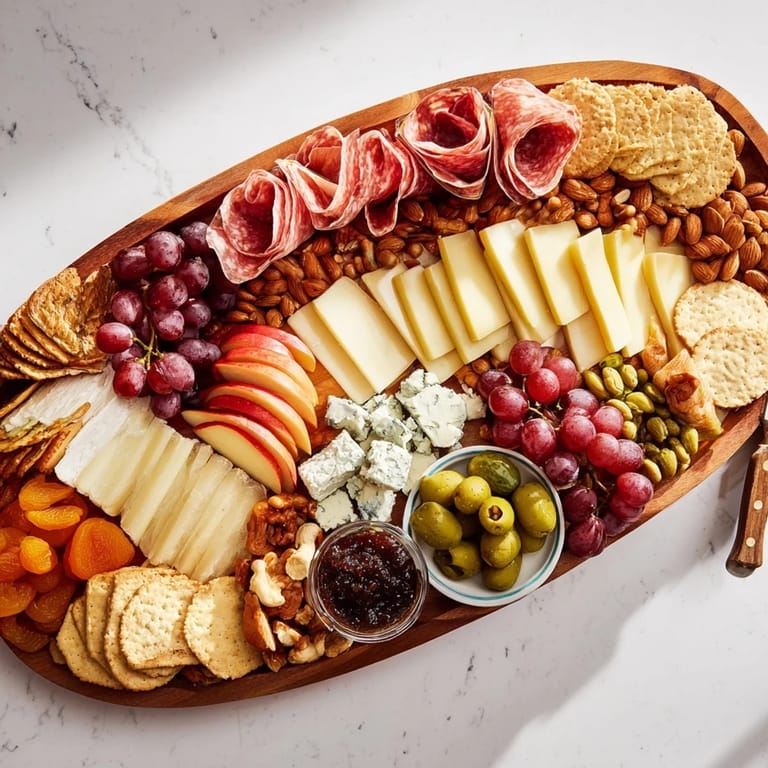
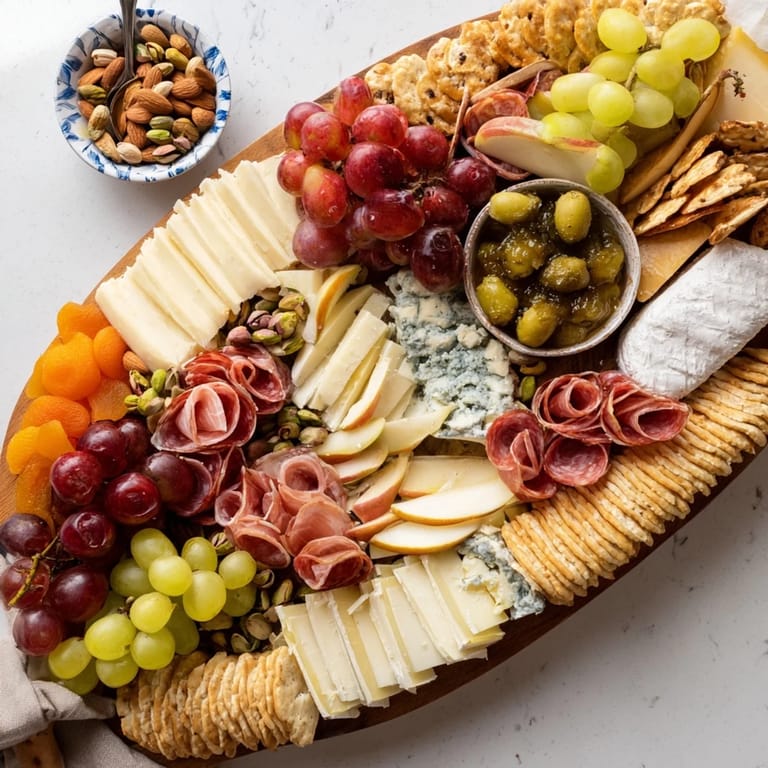
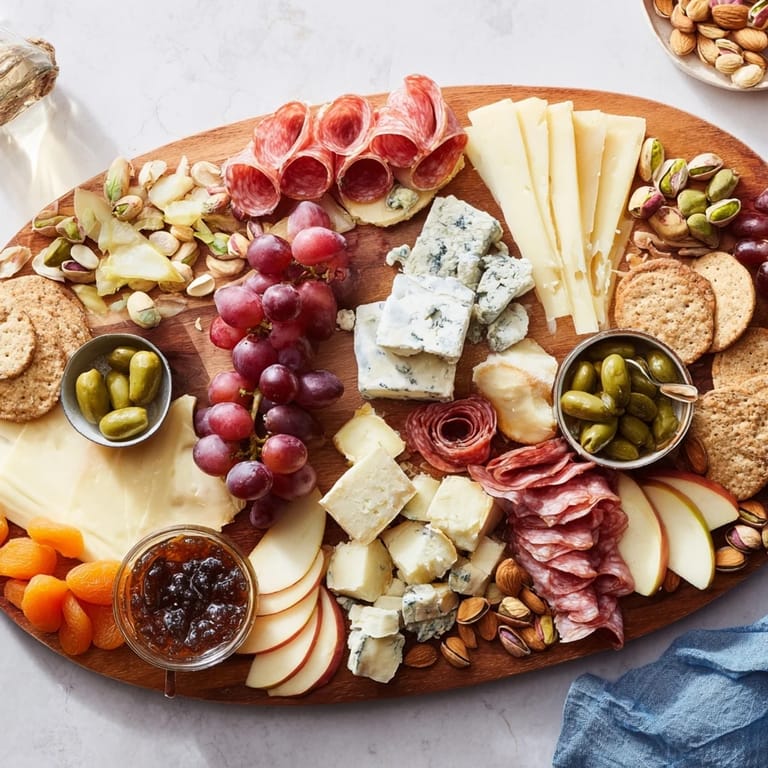
Save I discovered the magic of the gilded edge board at a wine-tasting evening hosted by my neighbor, who presented this stunning arrangement as if revealing a secret. The moment I saw it—all those gorgeous cheeses, cured meats, and fruits arranged like jewels along the rim with that dramatic empty center—I felt the dinner shift from casual to special. It was the first time I realized that how you present food is just as important as what you serve, and that sometimes the most elegant gesture is knowing what to leave untouched.
When I first made this for my book club, I remember standing back and watching how people reacted—not just to the flavors, but to the presentation itself. Someone said, "This feels fancy enough for a celebration," and I realized that's exactly what matters. It wasn't the individual ingredients that impressed; it was the intention behind how they were arranged.
Ingredients
- Triple-cream Brie (120 g), cut into slim wedges: This is the luxurious heart of your board—it's creamy, forgiving, and tastes like comfort. Cut it into wedges just before serving so the texture stays perfect and elegant.
- Aged Manchego (120 g), sliced: This Spanish cheese brings a nutty, slightly caramel-like depth that keeps people coming back for another slice. Its firm texture also means it holds up beautifully along the rim without crumbling.
- Blue cheese (100 g), crumbled or sliced: For those who love a bold moment on their palate. Crumbling it gives a more rustic feel, while slicing keeps things refined—choose based on your crowd.
- Goat cheese (100 g), formed into small rounds: Shape these gently into little balls the morning of your event; they become these delicate, creamy focal points that guests find irresistible.
- Prosciutto (100 g), folded into ribbons: Fold it loosely just before arranging so it stays tender and doesn't stick to itself. It's the silky, salty foundation of your charcuterie moment.
- Thinly sliced salami (120 g): The paprika-tinged circles add visual warmth and a spicy whisper that balances the rich cheeses. Slice it just before serving for the best flavor.
- Coppa or bresaola (100 g): Coppa's marble of fat and lean creates beautiful patterns, while bresaola brings deep, almost wine-like richness. Either one elevates the entire arrangement.
- Red grapes (1 small bunch): Keep them clustered in small groups along the rim—they catch the light and provide sweetness that cuts through the saltiness.
- Green grapes (1 small bunch): The color contrast with red grapes is essential to the visual magic. Arrange them in alternating clusters.
- Pear (1 ripe), thinly sliced: Slice just before serving and arrange immediately so it doesn't oxidize and turn brown. Its delicate sweetness is the board's quiet sophistication.
- Apple (1 crisp), thinly sliced: Choose a variety that stays firm and doesn't brown too quickly—Granny Smith or honeycrisp are reliable. The snap of it contrasts beautifully with soft cheeses.
- Dried apricots (1 small handful): These jewel-toned morsels add chewiness and a concentrated sweetness that makes people pause and savor.
- Marcona almonds (1/4 cup): These Spanish almonds are buttery and almost sweet, a far cry from regular almonds. They deserve to be noticed, so arrange them in a small cluster.
- Salted pistachios (1/4 cup): Their green color is irreplaceable on the board, and the salt-sweet-nutty combo keeps people reaching back.
- Castelvetrano olives (1/4 cup): These buttery, mild olives are nothing like briny black ones. They're sophisticated and smooth, the kind that make you understand why olives matter.
- Cornichons (1/4 cup): These tiny pickles are your palate-cleansers and your visual pop of acid-green. They're essential to the balance.
- Fig jam or quince paste (1/4 cup): This is where sweet meets savory. Spoon it into a small bowl and nestle it along the rim. Fig jam is jammy and forgiving, while quince paste is more structured and sophisticated.
- Honeycomb or honey drizzle: If you can find honeycomb, it becomes a luxurious focal point. Regular honey works too—drizzle it over soft cheese as people are eating.
- Baguette, thinly sliced and lightly toasted (1): Toast it just enough to add structure without losing its tender crumb. It should be crisp on the outside but still yield when you bite.
- Assorted crackers (1 box): Vary the shapes and styles. Some thin and delicate, some with seeds or herbs. They're the blank canvas for everything else.
Tired of Takeout? 🥡
Get 10 meals you can make faster than delivery arrives. Seriously.
One email. No spam. Unsubscribe anytime.
Instructions
- Find Your Canvas:
- Select a large wooden or marble board with a prominent, defined rim—this is non-negotiable. The rim is what your entire arrangement will follow. A round or oval shape is traditional, but any elegant board with clear edges will work. Stand back and really look at its shape; you're designing around it.
- Prep With Intention:
- Arrange your small bowls or ramekins first, spacing them roughly equal distances around the rim. These will hold your jam, honey, and olives. This gives you anchor points for the rest of your design.
- Create Your Color Story:
- Start with cheeses, placing them in clusters of two or three of the same variety before moving to the next. This creates visual rhythm. Alternate creamy whites and pale yellows with the deeper blue and golden tones. Leave about an inch between each cluster so textures can be appreciated individually.
- Layer In The Charcuterie:
- Fold your prosciutto into loose ribbons and nestle them between cheese clusters. Let them ruffle naturally. Layer salami and coppa around the rim, slightly overlapping for depth. The folded cured meats should look almost sculptural—not flat and uniform, but alive.
- Tuck The Fruit:
- Slice your apples and pears as close to serving time as possible and lay them immediately on the board to prevent browning. Arrange grapes in small clusters, letting them rest naturally. Scatter dried apricots like small jewels. Fruit provides color contrast and freshness that cheese alone cannot achieve.
- Scatter Your Finishing Touches:
- Distribute almonds, pistachios, and cornichons in small groupings. These aren't meant to be uniform—think more like how someone might casually place them while chatting. This creates a lived-in, generous feeling.
- Honor The Empty Center:
- Step back and look. The center of your board should be completely empty and clear. This is the most important step. It's what makes this arrangement different from a regular cheese board. That negative space is what makes the arrangement feel intentional and elegant, like a frame around a beautiful picture.
- Final Touches:
- If using edible gold leaf, add it now as a whisper of sparkle. Drizzle honey over soft cheeses just before serving. Have cheese knives and small tongs nearby. Take a moment to look at what you've created before guests arrive—you've just made something genuinely beautiful.
 Save
Save I remember my mother-in-law's face when she saw this board for the first time. She kept walking around it, studying it from different angles, and finally said, "It's like jewelry." That's when I understood—this isn't really about feeding people, though it does that beautifully. It's about creating a moment where presentation becomes part of the gift.
The Art of Arrangement
Building this board is a meditation on balance and intention. You're not just placing food; you're creating a visual composition that respects both the board and what you're putting on it. Think of it like arranging flowers—some elements are focal points (the blue cheese, the figs), while others are supporting actors (the nuts, the cornichons). Each serves a purpose in the overall story. The key is to step back frequently and look at what you've created. If one area feels crowded while another feels bare, adjust. Trust your eye; it knows more than you think.
Pairing and Serving
This board is made for celebration, and the right drink makes all the difference. Champagne or sparkling wine brings effervescence that cuts through rich cheese, while a crisp Sauvignon Blanc provides herbal notes that echo the freshness of fruit and vegetables. The pairing isn't about matching flavors so much as creating rhythm—the drink refreshes your palate between bites, encouraging you to reach for another piece. Serve everything at room temperature; cold cheese closes up and hides its subtleties.
Making It Your Own
While this recipe is built on classic elegance, the best boards are personalized. If vegetarian guests are coming, swap the charcuterie for marinated artichoke hearts, roasted red peppers, or sun-dried tomatoes. Add items that matter to you or your guests—maybe that's a local cheese you discovered last week, or nuts from somewhere special. The structure stays the same, but the ingredients tell your story. For extra festivity, dust some nuts or the goat cheese with edible gold leaf. It sounds unnecessary until you see how it catches the light and makes people smile.
- Vegetarian guests can enjoy this board without charcuterie—it loses nothing in translation.
- Edible gold leaf is optional but transforms an elegant board into a celebration-worthy moment.
- Always check labels for allergens, especially nuts and gluten, before inviting guests.
 Save
Save There's something quietly powerful about an empty space surrounded by abundance—it teaches a lesson about restraint and intention that goes beyond the dinner table. Every time I make this board, someone ends up calling it the most beautiful thing they've ever eaten.
Cooking Guide
- → What types of cheeses suit this arrangement?
Soft triple-cream Brie, aged Manchego, crumbly blue cheese, and creamy goat cheese provide a balanced variety of flavors and textures.
- → How should charcuterie be prepared for the board?
Thinly slice salami, fold prosciutto into ribbons, and include delicate coppa or bresaola to add elegant, savory notes.
- → Which fruits complement the cheese and meats best?
Fresh red and green grapes, thinly sliced pear and apple, plus dried apricots, add sweetness and freshness to balance savory items.
- → Why arrange items only along the board's edge?
Positioning ingredients around the rim highlights the board’s shape by leaving the center empty, elevating presentation impact.
- → Can this board accommodate vegetarian preferences?
Yes, omit the charcuterie and add marinated artichokes, roasted peppers, or extra cheeses to create a vegetarian-friendly version.
- → What accompaniments enhance the overall flavor profile?
Marcona almonds, salted pistachios, Castelvetrano olives, cornichons, fig jam, quince paste, and honey provide varied textures and tastes.