 Save
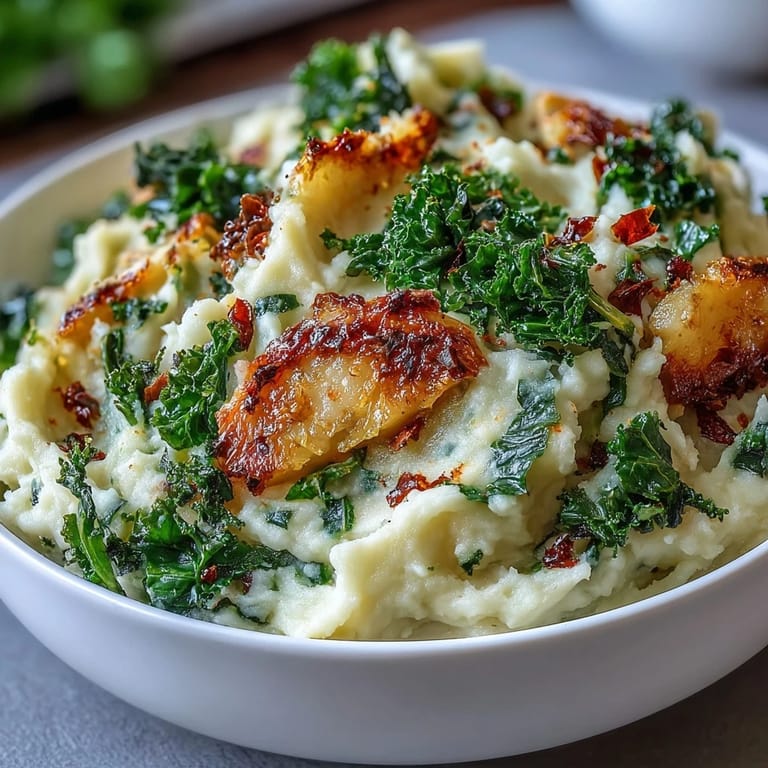
Save My neighbor Sarah showed up at my door one drizzly Dublin evening with a container of colcannon her grandmother had made, and I watched her fork through those creamy potatoes studded with leeks like she was unlocking a memory. That bite changed everything—suddenly I understood why this humble dish had survived centuries of Irish kitchens, passed down like a secret handshake. Years later, I started playing with the recipe, crisping up kale in the oven one night out of sheer curiosity, and something clicked. The contrast between the buttery softness and that shattered green crunch felt like the past meeting the present on the same plate.
I made this for a dinner party once when my oven was acting temperamental, and I remember standing there with a spatula in one hand and my phone in the other, texting my sister frantically about whether burnt kale counted as intentional charring. Everyone loved it anyway, and someone asked for the recipe before dessert was even served. That's when I realized this dish has a kind of magic that survives small disasters.
Ingredients
- Yukon Gold or Russet potatoes (900 g): Choose whichever feels familiar to you—Yukon Golds give you a naturally buttery flavor and creamy texture, while Russets absorb the cream more eagerly and create an airier mash.
- Unsalted butter (60 g): This isn't where you skimp; real butter is what transforms mashed potatoes from side dish to something people remember.
- Whole milk (120 ml) and heavy cream (60 ml): Warming these together prevents the potatoes from seizing up and turns the mash silky, not gluey.
- Leeks (2 large): They become sweet and mellow when cooked gently, nothing like their raw sharpness—always slice and rinse them thoroughly to catch hidden dirt between the layers.
- Spring onions (3): A gentler onion presence that adds brightness without overwhelming, stirred in at the very end for a little grassy pop.
- Kale (150 g): The crispy topping that saves this from being purely nostalgic; torn into pieces, it crisps faster and holds its texture better than strips.
- Olive oil (2 tbsp): For the kale, just enough to coat and help it turn golden and crackly in the oven heat.
Tired of Takeout? 🥡
Get 10 meals you can make faster than delivery arrives. Seriously.
One email. No spam. Unsubscribe anytime.
Instructions
- Wake up your oven:
- Heat it to 200°C (400°F) before you start anything else so the kale gets that quick, hot blast it needs to crisp rather than wilt.
- Crisp your kale:
- Toss the torn pieces with olive oil and salt, spread them on a baking tray in a single layer, and roast for 10-12 minutes while you work on everything else. Stir halfway through—you want golden and crackly, not blackened and angry.
- Cook the potatoes:
- Cover chunks with cold salted water, bring to a boil, then simmer for 15-18 minutes until a fork slides through without resistance. Drain them well and let them steam dry for a moment in the empty pot; this stops waterlogged mash before it starts.
- Soften your vegetables:
- While potatoes cook, melt half the butter in a skillet over medium heat and add your sliced leeks and spring onions. Sauté gently for 6-8 minutes until they're soft and smell sweet and oniony, stirring occasionally so they don't catch and brown.
- Warm your dairy:
- Heat the milk and cream together in a small saucepan—they don't need to boil, just become steamy. This keeps the potatoes from shocking and lumping when you add it.
- Mash with intention:
- Add the remaining butter to the still-hot potatoes and start mashing, then gradually pour in the warm milk mixture while you work. You're aiming for smooth and fluffy, not a gluey paste.
- Fold in the leeks:
- Stir the cooked leeks and spring onions into the mash, taste, and adjust salt and pepper until it feels right to you.
- Assemble and serve:
- Spoon the creamy mixture into a bowl, crown it with all that crispy kale, and sprinkle parsley over the top if you have it on hand. Serve while everything is still warm.
 Save
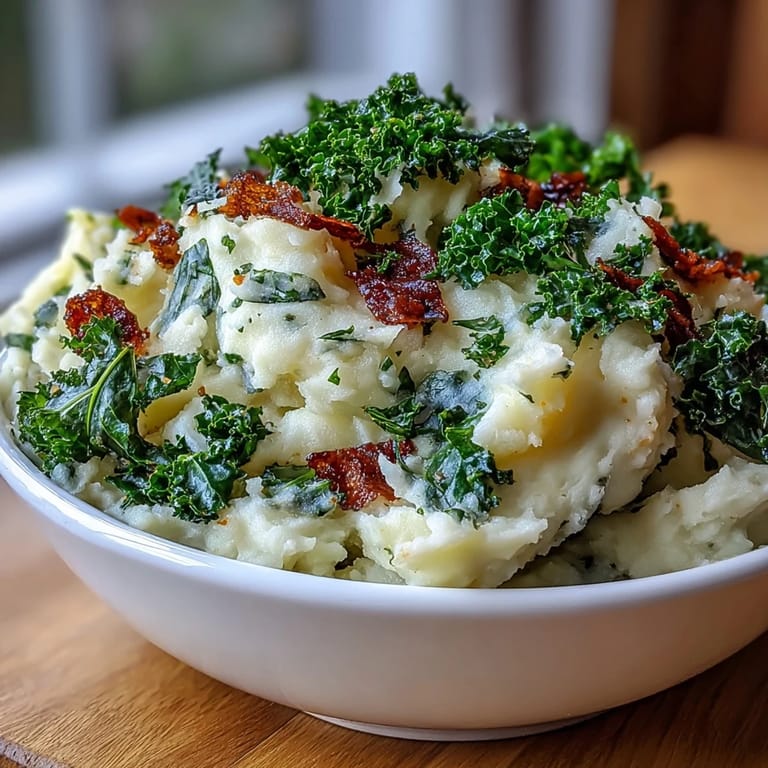
Save There was an afternoon my daughter helped me make this, and she spent twenty minutes carefully placing kale pieces on top like she was arranging a crown. She called it "the green surprise," bit into it, and her whole face changed—that exact moment when texture becomes interesting to a kid who usually avoids vegetables.
The Leek and Potato Love Story
Leeks have this reputation for being fancy or difficult, but they're actually one of the kindest vegetables to cook with because they become sweeter and more forgiving with gentle heat. In this dish, they're not a garnish or an afterthought—they're woven into every spoonful, soft enough to disappear but present enough to remind you they're there. I learned this by accident when I once sautéed them too quickly over high heat and they turned bitter; now I give them time and lower heat, and they repay me with that subtle sweetness that makes people ask what's in the mash even though they can't quite name it.
Why Crispy Kale Changes Everything
The original colcannon, if you look back far enough, didn't have crispy kale—it had plain mashed potatoes with cabbage stirred through, wholesome and complete. Adding crispy kale on top isn't about being trendy; it's about adding contrast to a dish that otherwise lives entirely in the soft and creamy territory. That crackle, that moment when the kale breaks between your teeth and releases a slightly charred, mineral flavor, wakes up your palate and makes the buttery potatoes taste even richer by comparison. It's the difference between a good side dish and one that people actually want on their plate.
Making It Your Own
Once you've made this a few times and the steps stop feeling new, you'll find yourself wanting to tinker—maybe a whisper of garlic, maybe some crispy bacon crumbled over the top, maybe fresh herbs mixed into the mash itself. These aren't betrayals of the recipe; they're how dishes evolve in home kitchens, becoming personal and true to the people cooking them. The foundation is solid enough that it welcomes your small changes.
- For a vegan version, swap the butter and dairy for plant-based equivalents and the result is still creamy and satisfying.
- Add cooked bacon or pancetta if you want a smoky depth that somehow makes the leeks taste even sweeter.
- This becomes a complete meal with a fried egg nestled on top and a simple salad on the side.
 Save
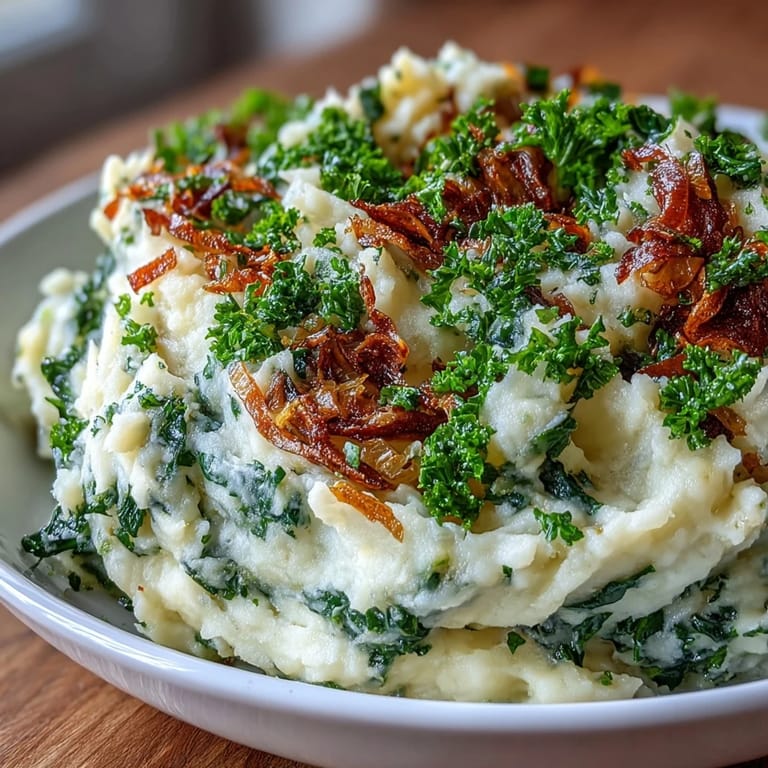
Save This dish has taught me that sometimes the most memorable food isn't complicated or exotic—it's something that tastes like warmth and smells like home, served by someone who took the time to get the details right. Make this for people you care about.
Cooking Guide
- → What type of potatoes work best?
Yukon Gold or Russet potatoes are ideal due to their creamy texture when mashed.
- → How do you achieve crispy kale?
Coat kale leaves lightly in olive oil, season with salt, then roast in a hot oven until crisp but not burnt.
- → Can this dish be made dairy-free?
Yes, substitute butter and cream with plant-based alternatives to keep it creamy and flavorful.
- → What is the purpose of sautéing leeks and spring onions?
Sautéing softens and enhances their natural sweetness, adding depth and mild onion flavor to the mash.
- → How should the potatoes be cooked before mashing?
Boil potatoes in salted water until fork-tender, then drain fully before mashing for the best texture.