 Save
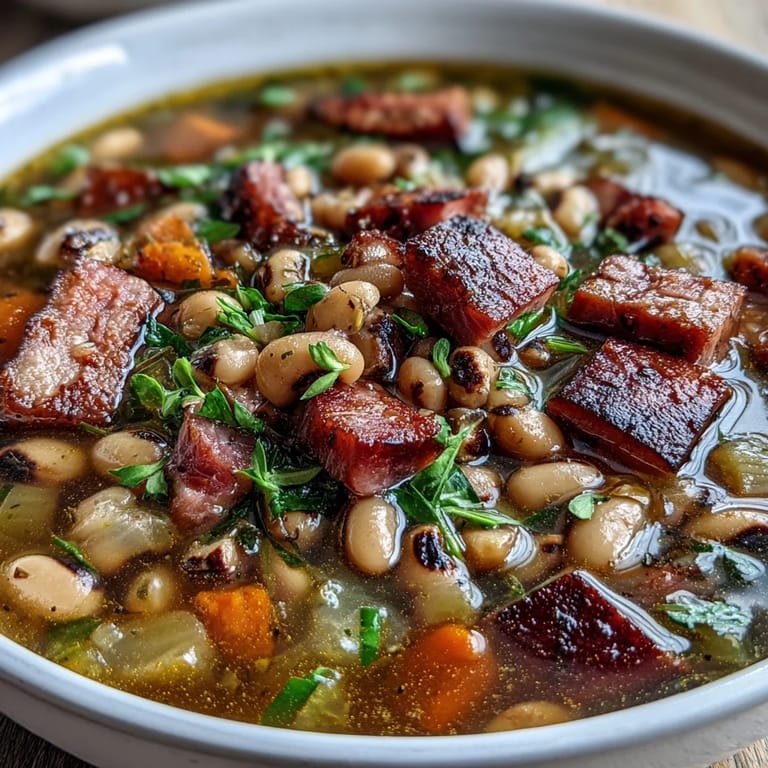
Save My neighbor knocked on my door one New Year's Eve with a steaming pot of this soup, saying her grandmother swore it was the reason her family never went hungry. I took one spoonful and understood—the ham was smoky, the black-eyed peas creamy, and something about it felt like a warm hug wrapped around good luck. That night, I made my own batch, and now it's become my January ritual, the one dish I refuse to skip when the calendar turns.
I made this for my book club on a rainy February afternoon, and three women went back for thirds. One of them admitted she'd been intimidated by dried beans her whole life, and watching her face light up when she tasted how tender the peas had become made the whole afternoon worthwhile. That's when I realized this soup has a way of making people feel braver in the kitchen.
Ingredients
- Cooked ham, diced (2 cups): The backbone of everything—ask your butcher for a piece with good marbling and don't skip the ham bone if you can get one, as it turns the broth into liquid gold.
- Dried black-eyed peas (2 cups) or canned (3 cans): Dried takes longer but rewards patience with a creamier texture; canned works beautifully when you're short on time and still delivers that lucky-bite feeling.
- Onion, carrots, and celery: This holy trinity is your flavor foundation—don't rush the sautéing, as those few minutes are when everything gets a chance to get cozy together.
- Garlic (3 cloves): Minced fine so it dissolves into the broth rather than asserting itself too boldly.
- Diced tomatoes with juices (one 14.5 oz can): They add acidity that keeps the soup bright instead of heavy, and the juice counts as liquid too.
- Chicken broth (6 cups) and water (2 cups): Low-sodium broth lets the ham and spices do the talking without overshadowing them.
- Smoked paprika (1 teaspoon): This is the secret layer of flavor that makes people ask what's in it.
- Dried thyme (1 teaspoon): Earthy and traditional, it belongs in Southern cooking the way salt belongs in soup.
- Black pepper (½ teaspoon fresh ground): Grind it yourself if you can—it tastes sharper and cleaner that way.
- Salt (½ teaspoon) and cayenne (¼ teaspoon optional): Start conservative with both and taste as you go, especially if your ham was already salty.
- Bay leaf (1): Remove it before serving or face the awkward moment of someone biting into it at the dinner table.
Tired of Takeout? 🥡
Get 10 meals you can make faster than delivery arrives. Seriously.
One email. No spam. Unsubscribe anytime.
Instructions
- Prepare your peas the night before:
- If using dried peas, soak them overnight in cold water—this isn't just a cooking rule, it's an act of planning that makes morning prep feel lighter. Drain and rinse them just before you start cooking.
- Build the aromatic base:
- Heat a splash of oil in your pot and add the onion, carrots, and celery together, letting them soften for about five minutes until they smell sweet and the onion turns translucent. This is when your kitchen starts smelling like something good is happening.
- Wake up the garlic:
- Stir in the minced garlic and listen for that delicate sizzle—cook it for just one minute, barely long enough to make the whole room smell amazing, then move forward before it burns.
- Introduce the ham:
- Add your diced ham and the ham bone if you have it, stirring gently for a couple of minutes to let the ham's smokiness start releasing into the oil. This is when you realize why a good ham bone is worth hunting for.
- Combine everything for the simmer:
- Add the black-eyed peas, tomatoes with their juice, both broths, water, bay leaf, paprika, thyme, black pepper, salt, and cayenne if using it. Stir it all together and turn up the heat until you see an active boil.
- The long, gentle simmer:
- Once it boils, lower the heat and cover the pot, letting it bubble quietly for about an hour if you used dried peas (thirty minutes if canned) until the peas are tender but not falling apart. The whole house will smell like New Year's luck by the time it's done.
- Remove the bone and taste:
- Fish out the ham bone and bay leaf, then taste carefully—adjust salt and pepper because every ham is different and you're in charge now. Some people like to mash a handful of peas against the side of the pot right here to thicken it slightly.
- Serve with intention:
- Ladle it hot into bowls and garnish with fresh parsley or green onions if you have them on hand, though the soup is complete and delicious on its own too.
 Save
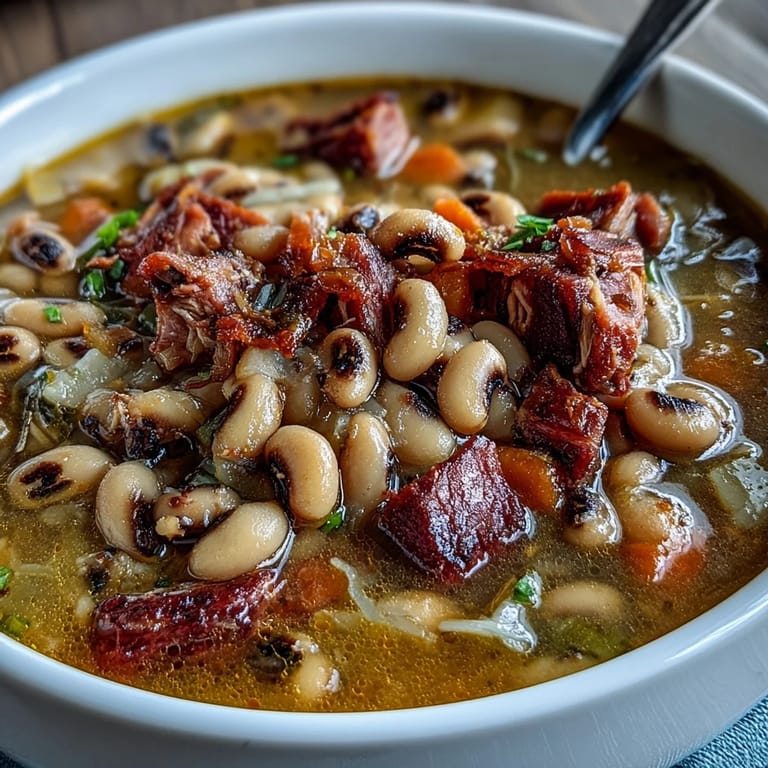
Save There's something about serving this soup on New Year's Day that feels bigger than just feeding people—it's like you're handing them a bowl of continuity and hope. My daughter now asks for it before her birthday to bring good luck into the year, and I never tell her no.
When to Make This Soup
Technically you can make this any time, but it lives its most meaningful life in winter, when the weather turns cold and people need reminding that good things take time. January first is the obvious moment, but I've made it on ordinary Tuesday nights when life felt uncertain and needed grounding, and it worked just the same.
Storage and Leftovers
This soup improves after sitting in the fridge overnight, as the flavors deepen and find harmony—I've never had a leftover that disappointed. It keeps beautifully for up to four days in the refrigerator and freezes for months, so making a double batch early in January means warmth waiting for you on future cold days.
Variations and Additions
The beauty of this soup is how it bends without breaking—I've made vegetarian versions using smoked paprika and vegetable broth for friends who don't eat meat, and somehow it still tastes like luck. Once I added a handful of spinach at the very end, and another time I stirred in a splash of apple cider vinegar just before serving because the flavors needed a little brightness. The soup welcomes your creativity the way good family recipes should.
- For a vegetarian version, swap the ham and ham bone for vegetable broth and an extra teaspoon of smoked paprika to keep that necessary depth.
- Cornbread is the only acceptable side dish, though a simple green salad cuts the richness nicely if you're feeding people with big appetites.
- If you find yourself wanting a thicker soup, mash some of the cooked peas gently against the side of the pot before serving, letting their creaminess thicken the broth naturally.
 Save
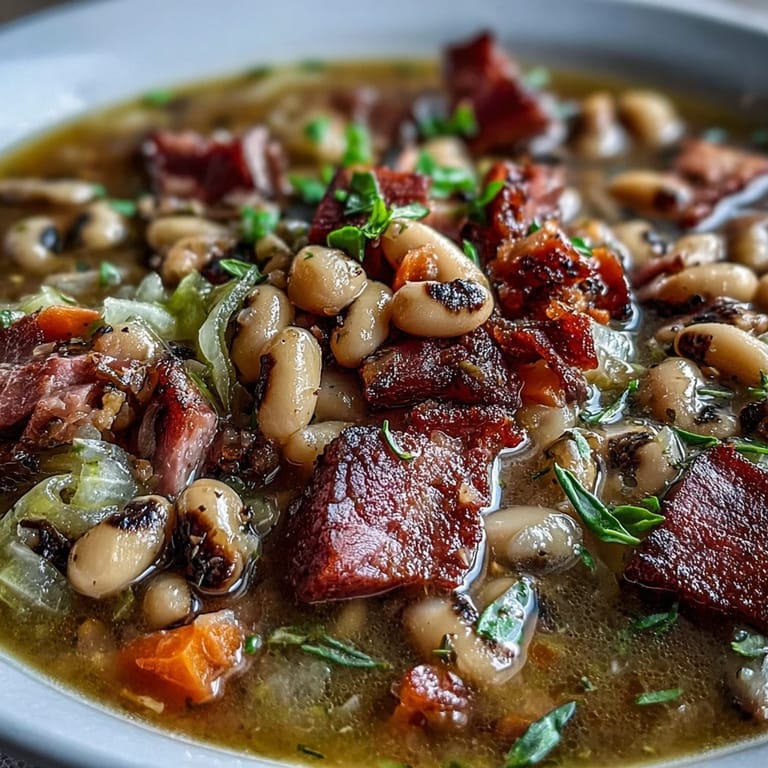
Save This soup became my answer to the question of what to make when I want to feel grounded and connected to something bigger than just dinner. Once you make it, it becomes part of your kitchen's story too.