 Save
Save I discovered the power of empty space while arranging a board for a friend who had just finished a meditation retreat. She mentioned wanting something that felt intentional, not rushed—and I realized that a platter didn't need to be crowded or fussy to be beautiful. That afternoon, I started placing ingredients with real thought: crisp vegetables on one side, cheese and nuts mirroring them perfectly opposite, and nothing in between but breathing room. She took one look and just sat quietly for a moment before eating. That's when I understood this wasn't really about the food at all.
My cousin brought this to a potluck once, and I watched people stop mid-conversation to just look at it. No one grabbed from the crowded center—there wasn't one. Instead, everyone reached toward their preferred end, creating this natural, unrushed flow. It turned out that constraint—two clear sides instead of chaos—actually made the whole thing feel less intimidating and more inviting.
Ingredients
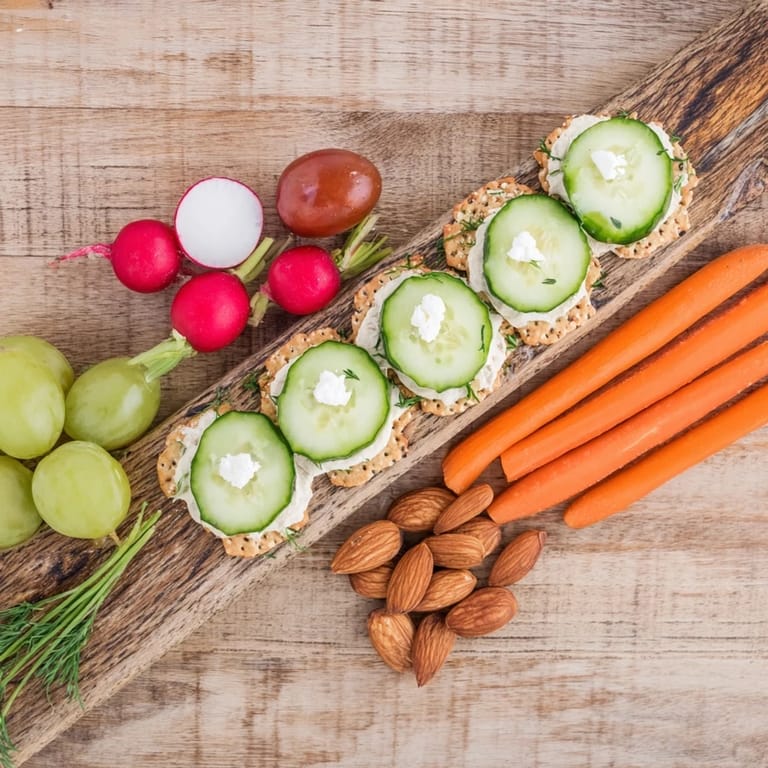
- Fresh cucumber: Slice them thin and even—they're your canvas, so uniformity matters more than usual here.
- Baby carrots: Their sweetness and bright color anchor the whole visual story.
- Radishes: Halve them to show off the white interiors; they add a peppery snap and honest crunch.
- Goat cheese: Roll it into small rounds between your palms—this little act of shaping turns ingredients into intention.
- Gluten-free crackers: Choose something with texture and color; they're structural and visual anchors.
- Roasted almonds: Toast them yourself if you can; the warm nuttiness tastes so much better than pre-roasted.
- Seedless red grapes: Their sweetness surprises people accustomed to savory platters, creating little moments of delight.
- Fresh herbs: Chives or dill do more than garnish—they smell like care and intention.
Tired of Takeout? 🥡
Get 10 meals you can make faster than delivery arrives. Seriously.
One email. No spam. Unsubscribe anytime.
Instructions
- Choose your stage:
- Pick a board that feels substantial—long, clean, empty—because the space itself is part of the design. If your board feels cramped, find a longer one; this recipe only works when there's real breathing room between the two sides.
- Build the first anchor:
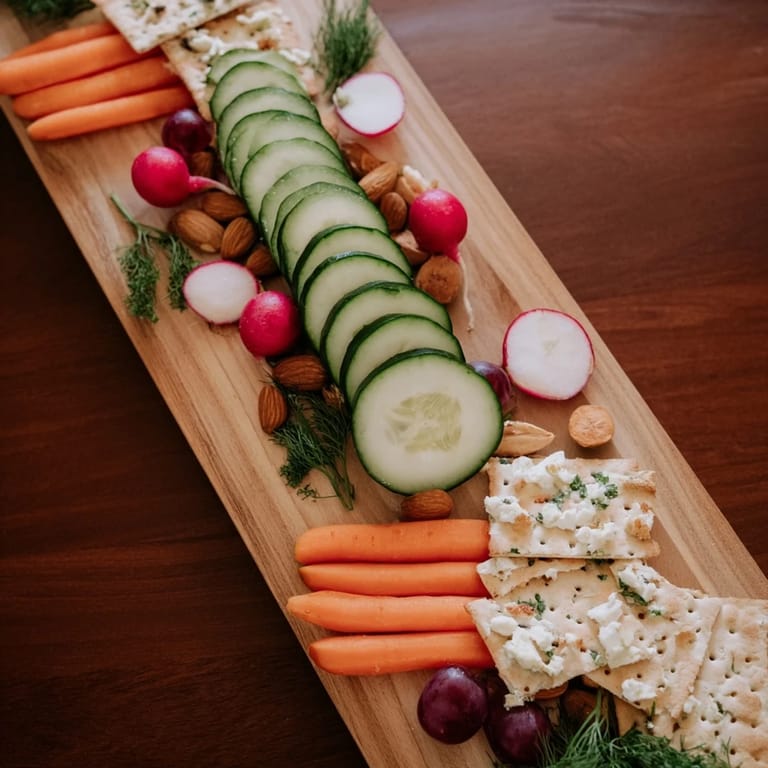
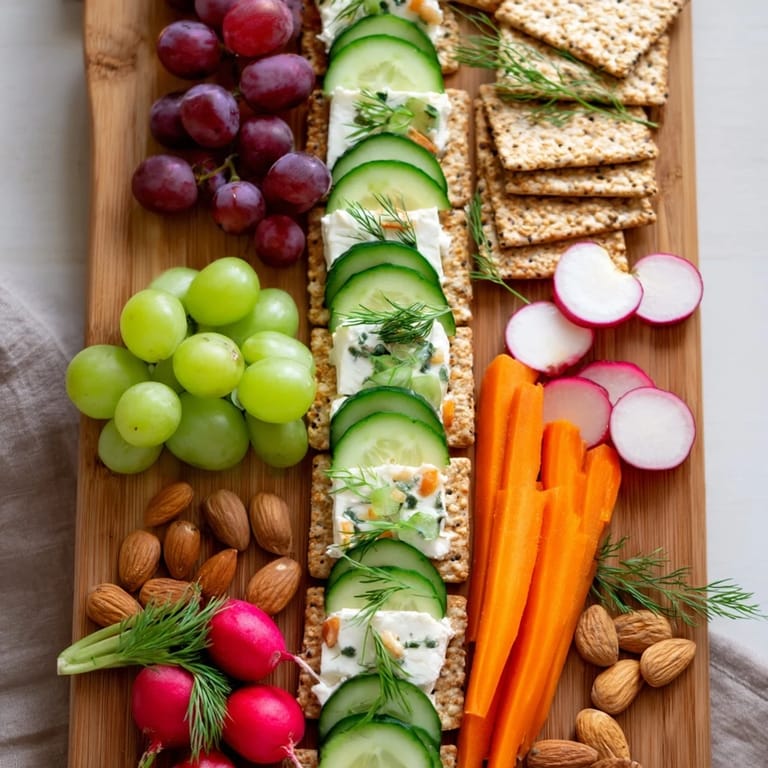
- At one end, start layering: cucumbers as your base, then crackers, then carrots, radishes, grapes, goat cheese, and almonds. Don't overthink the arrangement—let it be generous and informal, but organized. Step back and look at it; you're building one side of a conversation.
- Mirror with intention:
- Repeat everything at the opposite end with the remaining ingredients, using the first side as your guide. This isn't about robot precision; it's about creating visual symmetry that feels intentional without being stiff. A few millimeters difference won't matter—the balance will still sing.
- Finish with presence:
- Scatter fresh herb sprigs across both piles, then step away. Leave the middle completely empty—that emptiness is doing real work. Look at what you've made from across the room; does it feel balanced?
- Present with purpose:
- Encourage people to pause before eating, to notice the arrangement. Serve immediately while everything is still crisp and the moment still feels fresh.
 Save
Save A woman I know served this at her wedding reception, and she told me later that guests kept lingering around the board, talking and laughing longer than expected. The food became a reason to slow down together, not a hurried checkbox. That's the quiet magic of this dish—it gives people permission to be present.
Playing With Seasonality
Spring brings tender baby vegetables and fresh dill that almost glow on a board. Summer feels right with heirloom tomatoes added and basil whispered across the top. Autumn invites roasted nuts, maybe some figs, and a earthiness that matches the season. Winter could layer in pomegranate seeds and evergreen rosemary for color and fragrance. Let the season guide what you arrange—the principle stays the same, but the feeling shifts with what's available and what's in the air.
The Philosophy of Enough
This recipe asks something quiet of you: to trust that eight of each ingredient is enough, that a bare board is enough, that silence is enough. In a culture obsessed with abundance, there's something revolutionary about restraint. You're not proving anything or feeding an army—you're simply creating a moment. The fewer items on the board, the more each one is noticed and appreciated. Quality over quantity isn't just a saying here; it's the entire point.
Pairing and Moment Making
Serve this with a crisp white wine—Sauvignon Blanc, Pinot Grigio, or even a dry Riesling if you prefer something with more character. The acidity cuts through the richness of the cheese and almonds, while the freshness mirrors the vegetables. This isn't a platter for loud parties or quick bites; it's for conversations that matter, for moments when you want to notice what you're eating and who you're eating with. Light music helps. Good lighting helps. But mostly, just the intention of gathering slowly does the work.
- Serve at room temperature so flavors aren't muted and textures aren't compromised.
- Have small plates nearby for people who want them, but don't insist—some will eat directly from the board, and that's part of the ritual.
- If serving vegan guests, substitute cashew cheese or a quality plant-based alternative; the visual balance matters more than any single ingredient.
 Save
Save This platter is proof that you don't need to exhaust yourself to create something meaningful. Sometimes the most powerful dishes are the simplest ones, the ones that trust you to show up and be present rather than scrambling to impress.
Cooking Guide
- → What ingredients create the balance in this platter?
Fresh cucumbers, baby carrots, radishes, goat cheese rounds, gluten-free crackers, roasted almonds, red grapes, and fresh herbs combine to form a visually balanced composition.
- → How do I achieve the symmetrical arrangement?
Arrange half of each ingredient in a neat pile at one end of a long board, then mirror the arrangement exactly on the opposite end, leaving the center empty.
- → Can this be made vegan-friendly?
Yes, substitute the goat cheese with a plant-based cheese alternative to maintain the textures and flavors.
- → What type of board works best for the presentation?
Use a long wooden or slate board at least 60 cm in length to highlight the separated ingredient piles and emphasize harmony.
- → Are there suggested pairings for this platter?
A crisp white wine such as Sauvignon Blanc complements the fresh produce and cheese, enhancing the overall experience.
- → How long does preparation take?
Preparation takes about 15 minutes with no cooking involved, making it quick and easy to assemble.