 Save
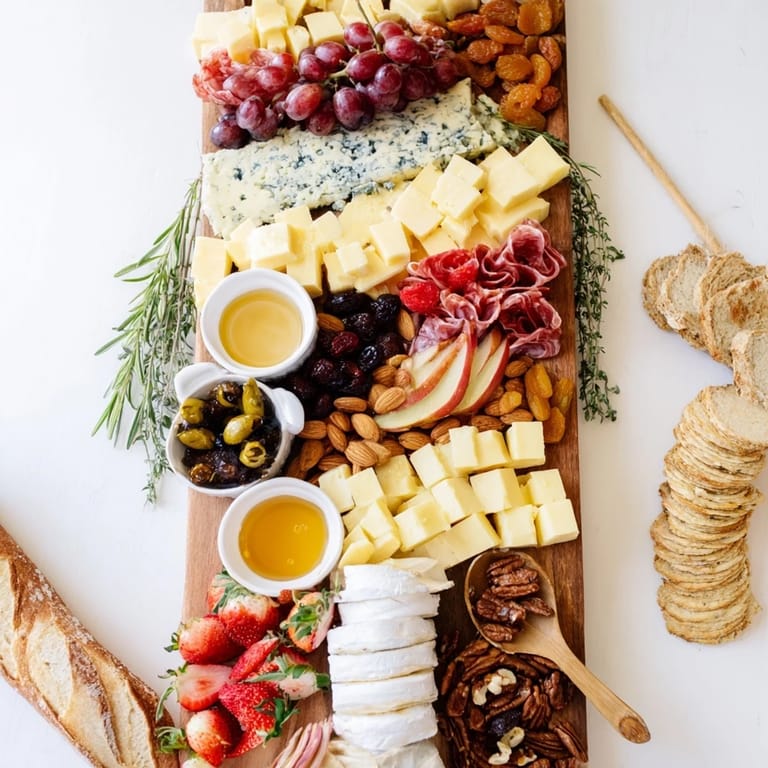
Save I'll never forget the moment my friend Sarah pulled out a grazing board at her dinner party and the whole room gasped—not because of what was on it, but because half of it appeared to be tumbling off the edge in the most artfully chaotic way. I watched guests lean over the table edge to pluck cascading cheese and figs, their faces lighting up like they'd discovered some secret treasure. That night, I realized a grazing board could be more than just appetizers arranged on a plank; it could be theater. Now whenever I set one up, I'm thinking about that cascading effect, that sense of abundance spilling over, making everyone feel like they're part of something abundant and a little bit daring.
I made this for my parents' anniversary party last spring, and my dad—who normally just eats what's on his plate—spent twenty minutes constructing the perfect bite from the pieces spilling onto the table. He was genuinely delighted, treating the fallen elements like they were the best part of the whole spread. My mom laughed and said it was the first time she'd seen him interact with food like it was a puzzle to solve rather than just fuel. That's when I knew this board style was more than aesthetics; it actually changes how people engage with eating together.
Ingredients
- Brie, sliced (150 g): This soft cheese is your anchor—it cradles other ingredients and gives you something creamy to build around, plus it softens slightly at room temperature, making it easier to arrange in loose, elegant layers.
- Aged Cheddar, cubed (150 g): Its firm texture means it won't crumble under the weight of cascading elements, and the sharp flavor cuts through rich accompaniments beautifully.
- Blue cheese, crumbled (100 g): A small amount goes a long way; the salty, bold flavor makes each taste memorable and adds visual contrast with its veined appearance.
- Goat cheese, sliced (100 g): Its tanginess and creamy texture balance sweeter elements like figs and honey, and thin slices drape elegantly over the board edge.
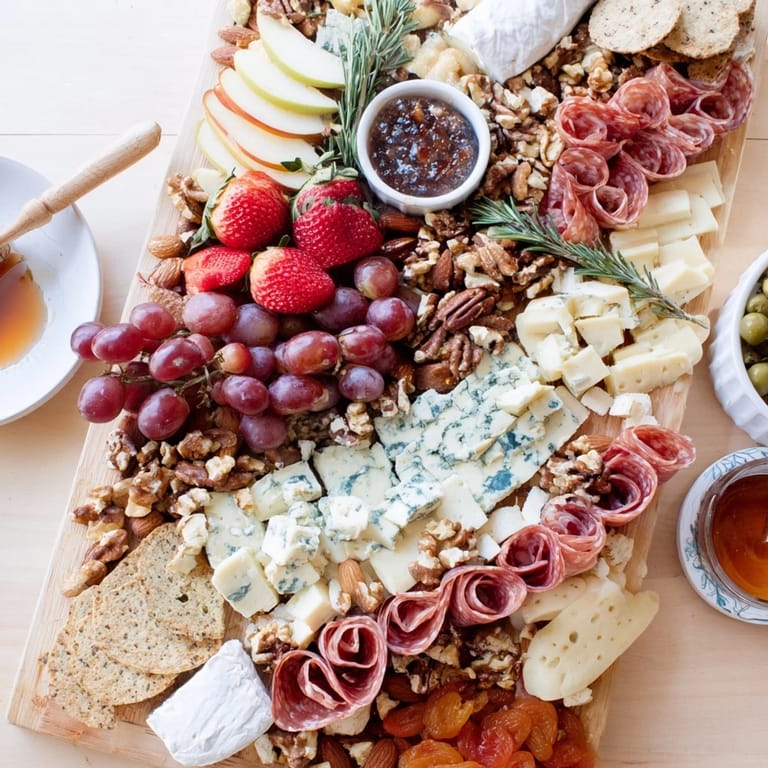
- Prosciutto (100 g): When folded gently, it creates soft waves that enhance the waterfall illusion, and its salty minerality pairs with every other element on the board.
- Salami, sliced (100 g): Choose a variety with good marbling so the slices stay flexible and don't crack when you arrange them in cascading folds.
- Red grapes, small clusters (1 cup): Keep them in tiny clusters so they nestle naturally between cheeses and can roll dramatically off the edge without looking accidental.
- Strawberries, halved (1 cup): The bright color draws the eye, and halving them gives you more surface area for arranging and more pieces to work with spatially.
- Blueberries (1/2 cup): These are your tiny jewels—use them to fill gaps and create movement, letting a few roll off the table edge intentionally.
- Pear, thinly sliced (1): Slice just before assembly so it doesn't brown; the pale color and delicate shape create elegant vertical elements among the chaos.
- Dried apricots (1/2 cup): Their chewy texture and golden color bridge fresh and cured elements; arrange some standing upright for visual interest.
- Dried figs, halved (1/2 cup): These are richly sweet and pair beautifully with blue cheese—position them where they'll catch light and look like little jewels.
- Almonds and walnuts (1/3 cup each): Scatter these last, using them to fill any gaps and add textural contrast; they're forgiving ingredients that make the board look fuller without careful placement.
- Baguette, sliced and toasted (1): Toast it lightly so it holds its shape when positioned vertically, and keep a few slices to lean casually off the board edge.
- Assorted crackers (150 g): Choose a mix of shapes and sizes so you can stack some vertically and lean others for movement and visual rhythm.
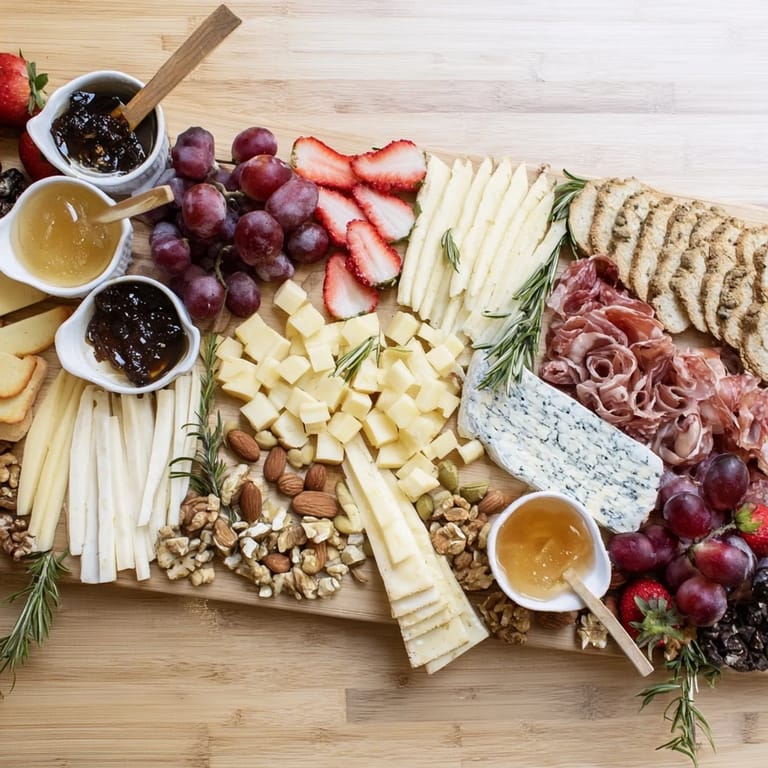
- Honey (1/4 cup): Drizzle it over the board and let a few drops trail onto the table for drama; it also acts as an edible accent that catches light.
- Fig jam (1/4 cup): A smaller bowl of this sits on the board, with a few spoons' worth drizzled onto the table surface for the waterfall effect.
- Mixed olives (1/4 cup): Use a mix of green and dark for color contrast; position some rolling down the table edge like they're escaping.
- Fresh herbs—rosemary and thyme: These add fragrance and color; tuck small sprigs between cheeses and let a few trail off the board edge for movement.
Tired of Takeout? 🥡
Get 10 meals you can make faster than delivery arrives. Seriously.
One email. No spam. Unsubscribe anytime.
Instructions
- Set the stage with your board:
- Position your large wooden or marble board so one long edge hangs over the table—usually about six to eight inches of overhang gives you plenty of space for ingredients to cascade without being so far they fall onto laps. Think of the overhang as your waterfall's edge.
- Create the cheese foundation:
- Start with your Brie near the board's far edge, overlapping slices slightly in a gentle fan shape. Let the last few slices extend deliberately past the board's boundary onto the table surface—this is where the magic begins.
- Layer the cured meats with intention:
- Fold your prosciutto and salami into loose, organic shapes beside the cheese, letting them drape over the edge like fabric falling from a shelf. The folds create movement and that illusion of controlled tumbling.
- Scatter fresh fruits for color and flow:
- Arrange grape clusters to nestle between cheese pieces, positioning some so they rest naturally on the table surface. Place strawberry halves cut-side up for visual depth, and let blueberries sit in small groups that appear to roll gently off the edge.
- Tuck dried fruits and nuts strategically:
- Position dried apricots and fig halves standing slightly upright or at angles to catch light. Scatter almonds and walnuts to fill visual gaps, using them generously on both the board and table surface to create the impression that everything's spilling over together.
- Position crackers and toast for vertical interest:
- Stand some baguette slices upright like little soldiers, lean others against cheeses, and stack a few crackers at different angles. Several should point toward or rest on the table edge, as if the arrangement is too abundant to contain.
- Place your liquid and soft elements:
- Set small ramekins or bowls of honey, fig jam, and olives on the board itself, then drizzle a teaspoon of honey and scatter a few olives onto the table surface below to complete the waterfall effect and give guests easy access to condiments from both levels.
- Add the finishing touches:
- Tuck fresh rosemary and thyme sprigs throughout the arrangement, tucking some into gaps and letting a few drift onto the table. Step back, adjust any elements that look too rigid, and remember that a little asymmetry is what makes this feel natural and inviting.
- Serve with confidence and flexibility:
- Encourage your guests to take from both the board and the table surface—this isn't precious, it's abundant. The beauty is that as pieces disappear, the remaining elements shift and resettle, creating a constantly evolving centerpiece that stays beautiful from start to finish.
 Save
Save I've learned that the best part of a board like this isn't the individual ingredients—it's watching someone take a piece of prosciutto, combine it with blue cheese and a dried fig, then look up with that satisfied smile that says they've created something delicious from the chaos. That moment of discovery, when a guest realizes they can build their perfect bite from the pieces spilling across both surfaces, is when this board stops being decoration and becomes genuine hospitality.
Timing and Preparation Strategy
The beauty of this board is that it comes together in roughly thirty minutes, but much of that can be done in advance. I usually prep my ingredients in the morning—washing and halving berries, toasting bread, cutting cheese into the shapes I'll need—then store everything in the fridge in separate containers. About twenty minutes before guests arrive, I assemble the board itself, which is the fun, creative part where you get to actually see the waterfall effect come to life.
Wine and Pairing Moments
A crisp white wine like a Sauvignon Blanc or a dry Riesling transforms this board from nice appetizer to an experience. I learned this when a guest brought a sparkling rosé to a gathering where I'd made this board, and suddenly the combination felt celebratory rather than casual. The acidity cuts through the richness of the cheeses and cured meats, while the slight sweetness in a Riesling echoes the honey and figs. Now I always mention wine pairing when I'm setting up because it genuinely completes the picture.
The Presentation That Actually Matters
The waterfall effect isn't just about looking impressive—it's actually functional because it gives guests visual permission to take food from the table surface without feeling like they're ruining something precious. I've noticed people relax more and eat more freely when the board appears intentionally abundant and a little bit wild. It's the opposite of those perfectly arranged boards that make you feel guilty for disturbing them.
- Use parchment or butcher paper underneath the table's overhang for easy cleanup and to prevent any spills from damaging your table surface.
- Keep extra ingredients nearby so you can refresh the board mid-party if certain elements disappear faster than others.
- Remember that the board is meant to be eaten, so don't spend so much time arranging that guests feel like they're interrupting art.
 Save
Save Every time I make this board, I'm reminded that feeding people beautifully doesn't mean fussy or complicated—it means creating an experience where abundance feels genuine and everyone walks away feeling welcomed. This is my favorite kind of entertaining.
Cooking Guide
- → How do I create the cascading waterfall effect?
Arrange ingredient layers so some pieces extend beyond the board's edge, letting fruits and crackers spill naturally onto the table surface below.
- → Can this board be made vegetarian-friendly?
Yes, simply omit cured meats and use plant-based cheeses or additional fruits and nuts for variety.
- → What accompaniments complement this board?
Include honey, fig jam, olives, and fresh herbs like rosemary or thyme to enhance flavors and add visual appeal.
- → How can I keep the board fresh before serving?
Prepare shortly before serving and keep chilled if necessary, covering loosely with plastic wrap to maintain freshness.
- → What tools help with the assembly?
Large wooden or marble boards for display, small bowls for condiments, and cheese knives or tongs for arranging and serving.