 Save
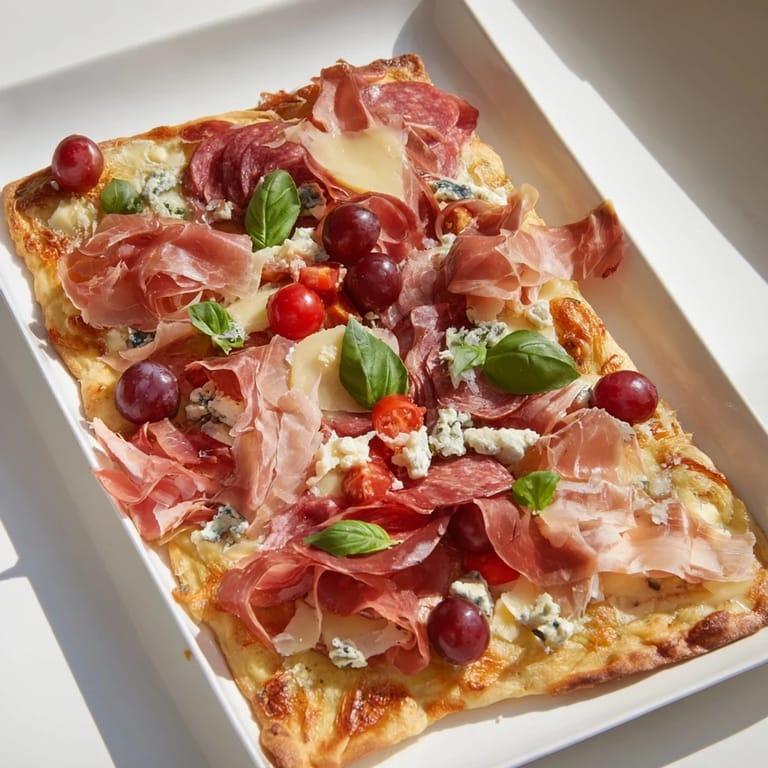
Save The first time I set out to feed a crowd without spending hours in the kitchen, I remembered my friend Marco's sprawling charcuterie board from a summer dinner in Tuscany. Instead of the usual static spread, I thought: what if the flatbread itself became the main event? I grabbed some lavash from the pantry, warm from the oven, and started layering on whatever cured meats and creamy cheeses I had on hand. Watching people tear into those golden rafts, the warm bread giving way to cold, salty prosciutto and creamy brie, I realized I'd stumbled onto something special.
I made this for my sister's book club once, and I watched a room full of people who'd never met before suddenly become animated, pointing at flavor combinations and laughing as they debated which cheese-meat pairing was best. That's when it hit me: this dish isn't just food—it's a conversation starter, a reason to linger around the table and actually talk to each other.
Ingredients
- Flatbreads (3 large rectangular): Lavash, naan, or ciabatta flatbread create the sturdy base—think of them as your edible platform. They need enough structure to hold toppings without becoming soggy, so avoid anything too thin or soft.
- Olive oil (2 tbsp): Just enough to brush and lightly toast the bread, bringing out a subtle nuttiness and helping it crisp at the edges.
- Garlic clove (1 small, minced): A whisper of garlic—not overpowering—that clings to the warm bread and awakens your palate before the other flavors hit.
- Prosciutto (120 g / 4 oz): Its delicate sweetness and paper-thin texture are non-negotiable; ask your deli counter to slice it almost translucent.
- Salami (120 g / 4 oz): Choose a quality variety with good marbling—it provides that rich, slightly spiced anchor to the board.
- Smoked turkey breast (120 g / 4 oz, thinly sliced): The lighter meat option that prevents the board from feeling too heavy or meat-forward.
- Soppressata or chorizo (120 g / 4 oz): This is where you introduce smokiness and a hint of spice—the backbone that ties everything together.
- Brie (120 g / 4 oz, sliced): The creamy, approachable cheese that melts slightly against warm bread and acts as a canvas for bold cured meats.
- Aged cheddar (120 g / 4 oz, sliced): Its sharpness cuts through the richness and adds a satisfying, crumbly texture.
- Manchego (120 g / 4 oz, sliced): This Spanish cheese brings nuttiness and a firm bite that contrasts beautifully with softer cheeses.
- Blue cheese (100 g / 3.5 oz, crumbled): Use it sparingly—its boldness is the exclamation point, not the whole sentence.
- Seedless grapes, halved (1 cup): They provide unexpected sweetness and a pop of juiciness that refreshes the palate between salty bites.
- Cherry tomatoes, halved (1 cup): Fresh acidity brightens everything and looks cheerful scattered across the board.
- Marinated olives (1/2 cup): Their briny punch grounds the sweet and rich elements around them.
- Roasted red peppers, sliced (1/2 cup): Silky, slightly smoky, and naturally sweet—they soften the intensity of aged cheeses.
- Fresh basil leaves (1/4 cup): Tear them just before serving so they stay bright green and fragrant rather than bruised and dark.
- Honey or fig jam (1/4 cup): Drizzle just before eating so it doesn't soak into the bread—it's the secret finishing touch that makes people ask for the recipe.
Tired of Takeout? 🥡
Get 10 meals you can make faster than delivery arrives. Seriously.
One email. No spam. Unsubscribe anytime.
Instructions
- Heat your stage:
- Preheat your oven to 200°C (400°F) so it's ready to give those flatbreads a gentle warmth. A hot oven is essential—you want them to crisp up just enough to hold everything without becoming brittle.
- Oil and garlic the bread:
- Brush each flatbread lightly with olive oil and scatter that minced garlic across the surface. The oil will carry the garlic's flavor into every bite as it toasts.
- Toast until golden:
- Pop them into the oven for 5–7 minutes, watching carefully so they turn pale gold at the edges but stay flexible enough to tear. You're aiming for a texture somewhere between bread and a crisp, not a cracker.
- Arrange your rafts:
- Pull those warm flatbreads out and place them on your largest wooden board or platter, giving each one breathing room. This is your stage—make it feel intentional.
- Layer meats and cheeses:
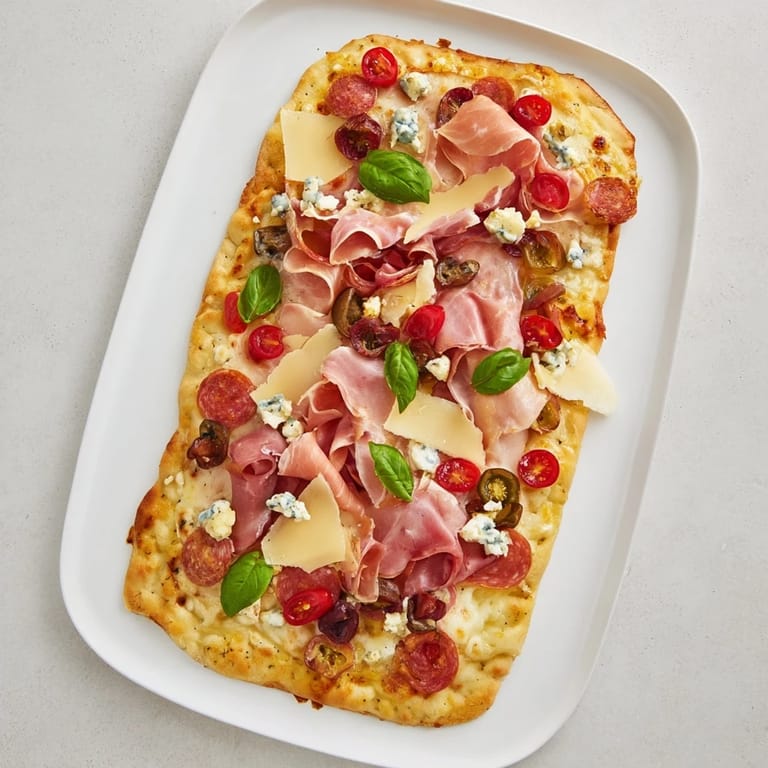
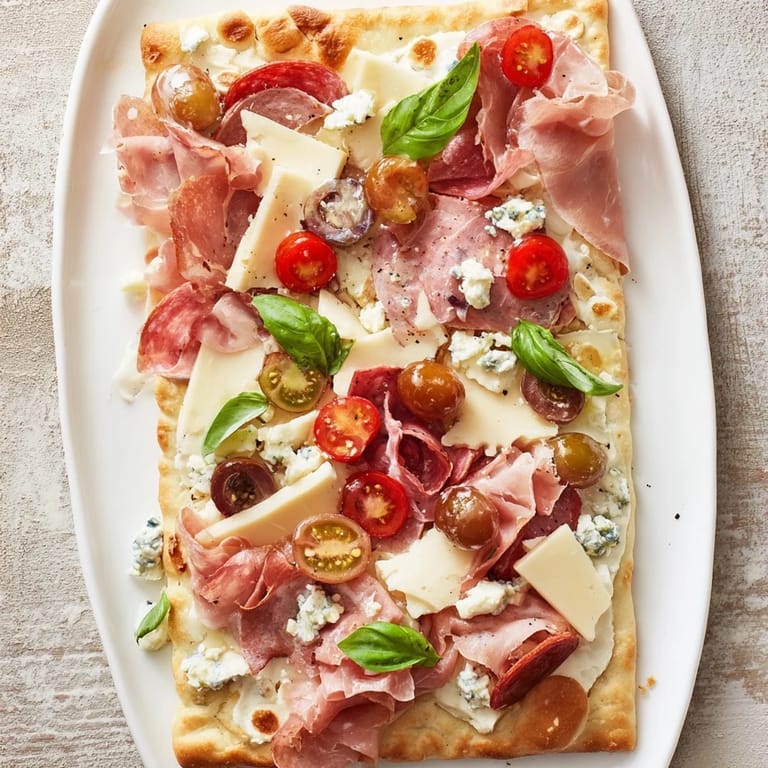
- Start laying down your cured meats and cheese slices in an alternating pattern across each flatbread. Don't just pile them randomly; arrange them so each piece of bread shows different combinations as you move across.
- Fill the spaces:
- Tuck grapes, cherry tomatoes, olives, and roasted red peppers into the gaps, letting them create pockets of color and flavor. Think of it like a delicious landscape where nothing feels cramped.
- Finish and serve:
- Tear your basil leaves by hand (not a knife—it bruises them) and scatter across the top. Serve with honey or fig jam on the side in a small bowl so people can drizzle it on their pieces as they go.
 Save
Save There's something almost meditative about watching someone taste all those flavors in a single bite—their eyes light up when they hit that combination of warm bread, cold cheese, and salty meat they didn't expect. That moment of joy is what keeps me coming back to this dish.
Building Flavor Balance
The secret to a great rustic raft is contrast—warm against cold, salty against sweet, rich against fresh. If you load up on heavy cured meats, let the cheese lean toward aged and sharp rather than creamy. If you want more soft cheeses, lighten the meat selection. It's like composing a song where no single note dominates the melody. Pay attention to how your palate feels after each bite and adjust your next assembly accordingly.
Making It Your Own
This board is as flexible as your preferences and what you find at the market. Some days I add Marcona almonds for crunch, other times I reach for pickled vegetables or roasted chickpeas to layer in extra texture. One winter, I added pomegranate seeds and walnuts, and it completely changed the dish into something more autumnal and festive. The formula stays the same, but the personality shifts based on what speaks to you that day.
Pairing and Presentation
Serve this with a crisp white wine—something with bright acidity like a Sauvignon Blanc or Pinot Grigio cuts through the richness beautifully. If you prefer red, go light-bodied: a Barbera or young Chianti won't overwhelm the delicate balance you've built. The presentation itself is half the magic, so take a moment to step back and make sure your board looks inviting before people dig in. A wooden board, good lighting, and a little breathing room between elements transform this from appetizer to centerpiece.
- Don't prep more than an hour ahead or the flatbread will lose its warmth and structural integrity.
- Keep backup meats and cheeses in the kitchen so you can refresh the board if certain items get picked clean.
- Let the board sit at room temperature for a few minutes before serving so all the cheeses soften just enough to be truly delicious.
 Save
Save Every time I make this, I'm reminded that the best meals aren't always the most complicated—they're the ones that bring people together without fuss. This rustic raft does exactly that.
Cooking Guide
- → What types of flatbreads work best for these rafts?
Try lavash, naan, or ciabatta flatbreads as they crisp nicely and hold toppings well.
- → Can the meats be substituted?
Yes, feel free to swap out cured meats based on availability or preference for similar savory profiles.
- → How should the flatbreads be prepared before assembling?
Brush them with olive oil and minced garlic, then warm in the oven until lightly crisped for texture and flavor.
- → What accompaniments complement the meat and cheese layers?
Fresh grapes, cherry tomatoes, marinated olives, roasted red peppers, and basil provide freshness and color contrast.
- → Is there a recommended pairing for these flatbreads?
A crisp white wine or light-bodied red pairs beautifully with the rich meats and cheeses.