 Save
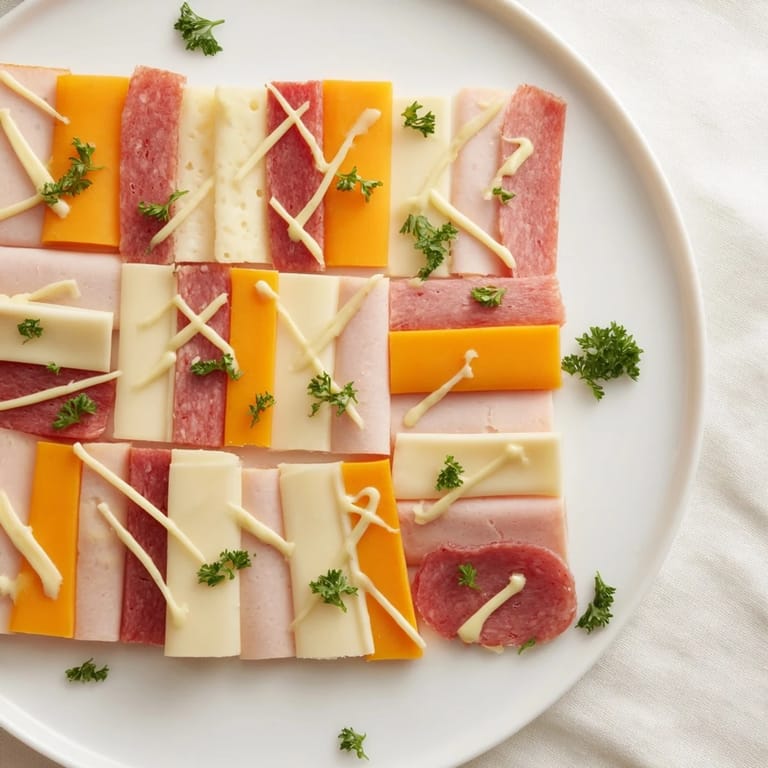
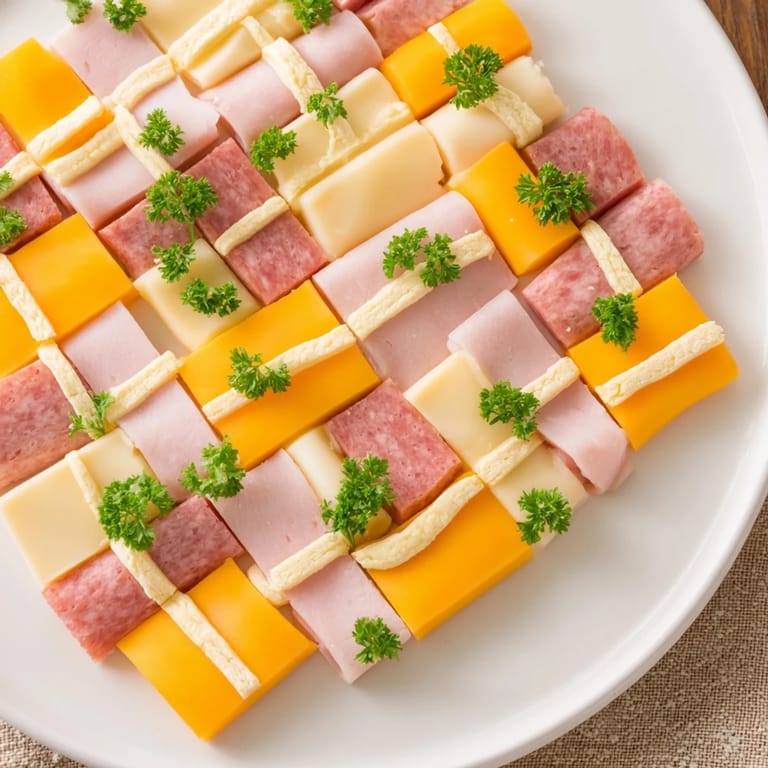
Save I discovered this dish at a gallery opening, of all places, where a caterer had arranged cured meats and cheeses on a board like they were preparing a canvas. The mustard lines caught my eye first—bright yellow threads connecting squares of ham and Swiss cheese in this deliberate, almost sculptural way. I asked for the recipe right there, partly because it tasted wonderful, but mostly because I loved that someone had taken the time to make something feel playful and artistic when they could have just thrown everything on a platter. Now it's become my secret weapon whenever I need to impress without spending hours in the kitchen.
Last spring, I made this for a small dinner party on my back patio, and my friend Sarah spent a solid ten minutes just photographing it before anyone was allowed to eat. She kept saying "it's too pretty to touch," which made everyone laugh, but then the mustard lines started getting a little smudged as people grabbed their first pieces, and somehow that made it even better—less intimidating, more inviting. That's when I realized the beauty of this dish isn't about perfection; it's about giving people permission to enjoy something elegant without overthinking it.
Ingredients
- Smoked turkey breast, sliced (100 g): The lightest flavor in your lineup, it keeps things balanced and adds a subtle smokiness that won't overpower the cheeses.
- Salami, sliced (100 g): This is your flavor anchor—choose a quality version you'd actually eat on its own, because its personality will shine through.
- Ham, sliced (100 g): The bridge between delicate and bold, it adds subtle sweetness and helps tell the story of the patchwork with its pale pink color.
- Swiss cheese, sliced (100 g): The holes make it instantly recognizable and add visual interest, plus it has a gentle nuttiness that plays well with everything else.
- Sharp cheddar, sliced (100 g): Don't be tempted by mild versions here—you want that bite and bold color to create real contrast in your arrangement.
- Provolone, sliced (100 g): It's the quiet sophisticate of the group, creamy and subtle, and it adds a beautiful pale yellow that rounds out your color palette.
- Whole grain mustard (2 tbsp): The texture and seeds matter here; they catch the light and make your "stitching" look deliberate and artisanal.
- Dijon mustard (2 tbsp): Sharper and smoother, it provides contrast in both flavor and appearance, and it pipes beautifully.
- Fresh parsley or chives, finely chopped (optional): A light scatter at the end breaks up the organized pattern just enough to keep it from feeling too precious.
Tired of Takeout? 🥡
Get 10 meals you can make faster than delivery arrives. Seriously.
One email. No spam. Unsubscribe anytime.
Instructions
- Cut everything into neat squares:
- Use a sharp knife and aim for 2-inch squares across all meats and cheeses—uniformity is what makes this feel intentional and quilt-like. Take your time here; it's actually meditative work.
- Build your patchwork pattern:
- Lay out your largest platter and start arranging, alternating meats and cheeses in a checkerboard or random patchwork pattern, like you're designing the pattern as you go. Step back occasionally to see how the colors and textures are playing off each other.
- Stitch it together with mustard:
- Fill a squeeze bottle or piping bag with your mustards and draw lines between the squares, alternating between whole grain and Dijon to create visual rhythm. Think of it like you're sewing the whole thing together with golden thread.
- Add the finishing touch:
- A light scatter of chopped parsley or chives adds a whisper of green and softens the organized look.
- Serve it fresh:
- Have toothpicks or small forks nearby so people can pick up individual squares without disrupting your careful arrangement too much.
 Save
Save What started as just a pretty arrangement turned into something more the moment my nephew asked if we could make a "different pattern" together next time. He was five, and suddenly we were talking about color theory and balance over a platter of cheese. Food has a way of doing that—making ordinary moments into conversations.
Making It Your Own
The skeleton of this dish is flexible, and that's the whole point. Once you understand the formula—alternating proteins and dairy with a little acid running through it—you can play with it endlessly. Roasted red peppers, grapes, or even thin-sliced apples can fill in squares alongside the classic meats and cheeses. I've added smoked salmon and cream cheese for a brunch version, and it worked beautifully. The color contrast is what matters, so think about what you want people to see before you think about what they're tasting.
The Serving Story
This is one of those dishes that works equally well at a formal dinner party or a casual gathering on the kitchen counter while you're getting ready. The thing I love most is that it doesn't require keeping anything warm or timing anything perfectly—it sits there, looking beautiful, while you pour drinks and catch up with people. There's something generous about that, something that says you care about them enough to make something thoughtful but relaxed enough to enjoy the party yourself.
Pairing and Presentation Tips
A crisp white wine—Sauvignon Blanc or Pinot Grigio—cuts through the richness perfectly, or if you prefer beer, something light and slightly bitter works wonders. For non-alcoholic options, sparkling water with a slice of lemon is surprisingly elegant alongside this. The presentation is half the appeal, so give yourself space to arrange it properly, and don't worry about it being perfectly symmetrical—some of the most beautiful examples I've made have been almost chaotic in their balance.
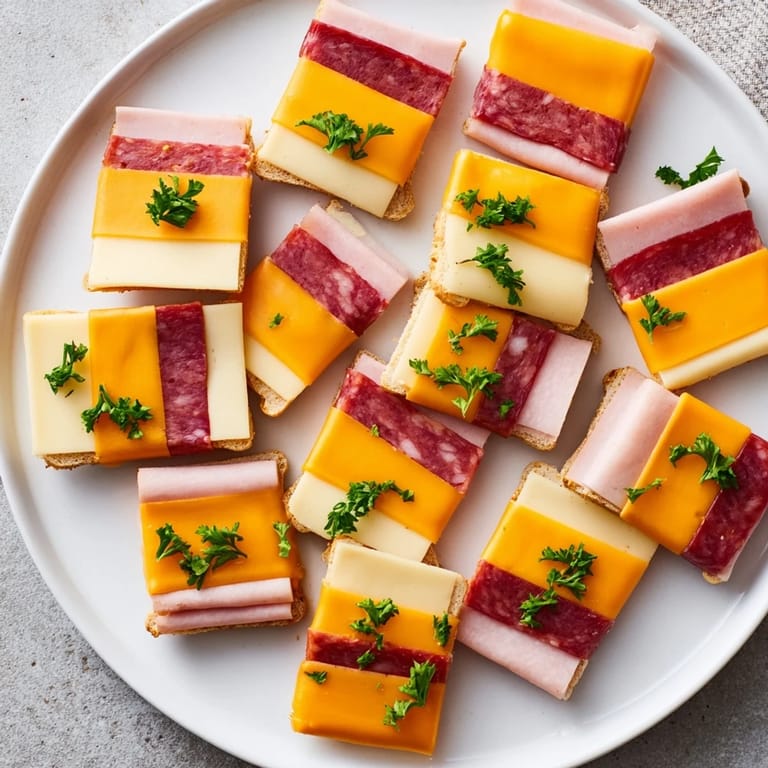
- Cut your squares slightly larger if people will be eating these standing up and mingling, smaller if they're sitting at a table.
- Serve on whatever surface feels right for your crowd—wood for casual, slate or marble for something more refined.
- Have small toothpicks ready, or better yet, wooden picks that feel nice in the hand.
 Save
Save This simple appetizer has a way of making people slow down and really taste what they're eating, noticing the interplay of flavors and textures in a way they might not with something fancier. That's the real magic here.
Cooking Guide
- → What types of meats work best for this platter?
Smoked turkey breast, salami, and ham provide a good balance of flavors and textures, but feel free to substitute with other sliced cured meats.
- → Can different cheeses be used?
Yes, Swiss, sharp cheddar, and provolone create a nice variety, but you can experiment with other firm cheeses that slice well.
- → How should the mustard lines be applied?
Use a squeeze bottle or piping bag to pipe alternate strips of whole grain and Dijon mustard between the squares, mimicking stitch lines.
- → Are there suggested accompaniments?
Sliced baguette or crackers complement this dish nicely, along with a crisp white wine or light beer for pairing.
- → Is this platter suitable for special diets?
The ingredient choices make it gluten-free and low carb, which can cater to many dietary needs.