 Save
Save I discovered hojicha lava cakes entirely by accident, standing in a Japanese tea shop on a drizzly afternoon, watching the baker slide individual ramekins into the oven. The aroma that emerged—toasted, earthy, almost smoky—made me pause mid-sip of my own tea. When I finally tasted one, the warm chocolate center pooling onto the plate felt like a small revelation, that perfect moment when two flavors you didn't know needed each other suddenly make complete sense together.
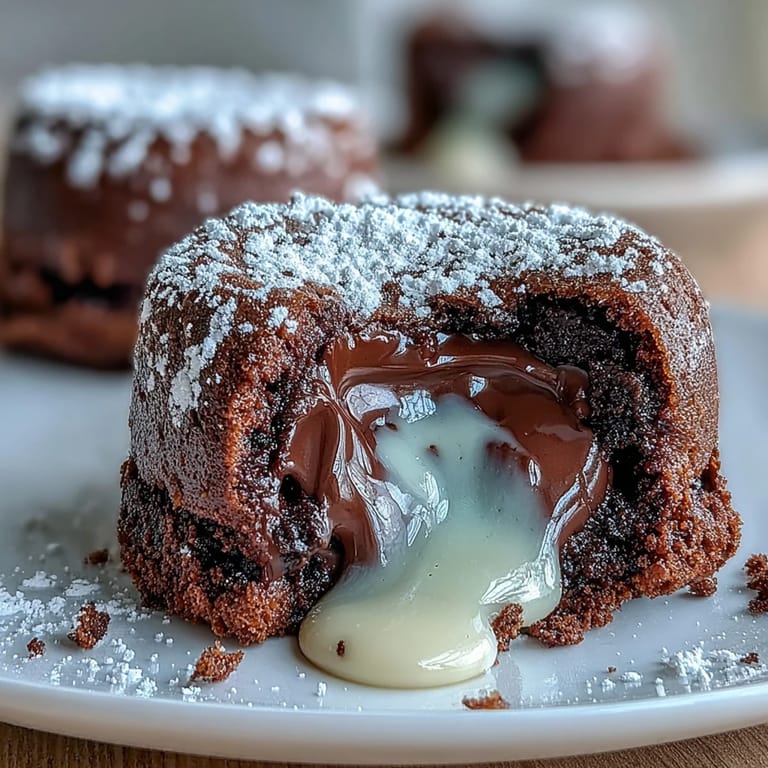
I made these for my partner on their birthday, nervous about the timing, worried the centers might set too firmly or not at all. When I inverted that first ramekin and watched the hojicha ganache spill across the white plate in slow, luxurious ribbons, I saw their face light up in a way that had nothing to do with sugar and everything to do with feeling genuinely surprised by someone who cared enough to try something difficult.
Ingredients
- White chocolate (160 g total): Use good quality white chocolate with at least 30% cocoa butter, or the cake will taste waxy and the ganache won't have that silky flow you're after.
- Hojicha powder (1 tsp): This roasted green tea is the soul of the dish, bringing an earthy warmth that prevents the white chocolate from becoming one-note sweet; buy it from specialty tea shops or online, not grocery store tea bags.
- Heavy cream (30 ml): The bridge between chocolate and ganache, so use real cream and not the ultra-pasteurized kind if your local shop carries it, as it froths and emulsifies more beautifully.
- Unsalted butter (90 g total): Room temperature butter folds into the batter without creating little greasy pockets, a lesson I learned the hard way with cold butter.
- Eggs (3 total: 2 whole, 1 yolk): The eggs are whisked to pale thickness to trap air, which makes the cake tender and mousse-like rather than dense.
- Granulated sugar (60 g): Whisked with the eggs until the mixture ribbons and holds peaks for a few seconds, which is your visual cue that enough air is incorporated.
- All-purpose flour (40 g): Sifted and folded gently to avoid overdeveloping gluten, which would make the cake tough instead of delicate.
- Salt (1/8 tsp): A whisper of salt brightens the white chocolate and makes the hojicha notes pop, so don't skip it even though it seems small.
Tired of Takeout? 🥡
Get 10 meals you can make faster than delivery arrives. Seriously.
One email. No spam. Unsubscribe anytime.
Instructions
- Make the hojicha ganache first:
- Chop your white chocolate fine and mix it with hojicha powder in a bowl, then pour hot cream over it and let it sit undisturbed for a full minute so the heat can gently melt the chocolate without you stirring it to death. Stir in soft butter and chill until you can roll it into four small, firm balls that won't collapse when the batter hits them.
- Prepare your ramekins with care:
- Butter them generously and dust with cocoa or flour, then tap the sides to dislodge any clumpy spots that might stick. This small step is the difference between a smooth inversion and a cake stuck to the side of its dish.
- Melt chocolate and butter together:
- Use a double boiler—a heatproof bowl over simmering water—and stir often until there are no white streaks left and everything is glossy smooth. Let it cool just a bit, maybe a minute, so it won't scramble the eggs when they meet.
- Whisk eggs and sugar until they transform:
- This takes longer than you think, maybe three to four minutes with a hand whisk or two minutes with electric, until the mixture is pale, thick, and holds ribbons when you lift the whisk. This aeration is what gives the cake its tender, almost mousse-like crumb.
- Fold everything together gently:
- Folding means using a rubber spatula and turning the bowl as you cut down the middle and sweep underneath, not stirring in circles, which crushes all that air you just worked into the eggs. Once you fold in the chocolate, add the sifted flour and salt in two additions, folding until you see no white flour streaks but not a second longer.
- Assemble with the ganache centers:
- Spoon a tablespoon of batter into each ramekin, nestle a cold ganache ball in the center, then top with remaining batter, evening out the tops with a spatula. The ganache should feel like it's sinking gently into the batter, cushioned and protected.
- Bake until the edges set but the center jiggles:
- At 200°C (390°F), watch around the eleven-minute mark—the edges should look baked and set, but the very center should jiggle slightly when you gently shake the ramekin. This is where experience and oven temperature make the difference, so check at eleven minutes and adjust.
- Invert while everything is still warm:
- Let the cakes rest just one minute, then run a thin knife around the edge to break the seal and flip onto a warm plate in one confident motion. The lava effect happens only when the ganache is still warm and fluid, so timing this final step is everything.
 Save
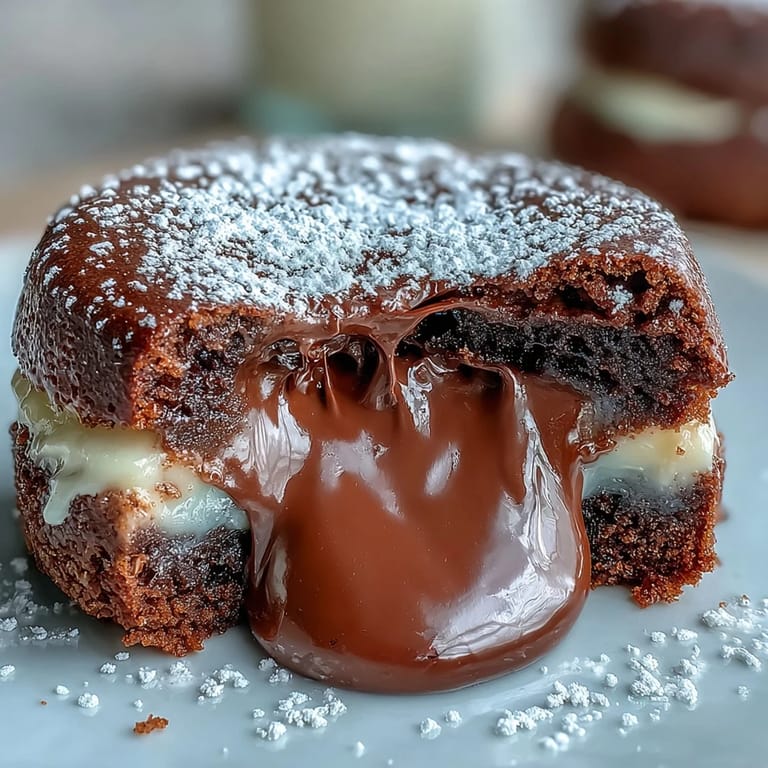
Save There's something quietly moving about watching someone cut into a warm lava cake for the first time, that pause before the fork breaks through, the moment of anticipation before the ganache reveals itself. These cakes became my go-to for marking small occasions precisely because they're both simple enough to make on a regular Tuesday and special enough to feel like someone took time and care.
The Magic of Timing
The eleven to thirteen minute window is genuinely not a suggestion—it's the difference between a fully set cake that won't flow and one that flows too much and soaks into the batter. I learned this through making these cakes in three different apartments with three different ovens, and each one had its own personality. Set a timer, pay attention, and trust that your oven will tell you what it needs if you watch for the signs: the edges should look dry and set, while the center should barely move when you shake the ramekin gently.
White Chocolate and Hojicha: Why They Work
White chocolate tastes like sweetness without much personality, which is exactly why it needed something with character standing next to it. Hojicha brings toasted notes and a gentle bitterness that grounds everything, preventing the dessert from becoming cloying or one-dimensional. The first time I tasted this combination, I understood why Japanese pastry shops take these pairings seriously—it's not about being precious or trendy, it's about flavor actually making sense.
Assembly and Service Tips
These cakes perform best when served within minutes of leaving the oven, still warm enough that the ganache moves like actual lava instead of sitting there like frosting. That said, you can absolutely assemble them several hours ahead and refrigerate, then add a minute or two to the baking time to account for the cold batter starting temperature. Dust with powdered sugar if you want elegance, serve with vanilla ice cream if you want indulgence, or present them naked if you want to let the layers tell the story.
- Cold ganache balls are essential and don't skip the chill time or they'll break apart in the batter instead of holding shape.
- Invest in good ramekins that conduct heat well, as thin ceramic bakes more evenly than thick stoneware.
- Serve immediately for the signature lava effect, as waiting even ten minutes will allow the ganache to set and lose its flow.
 Save
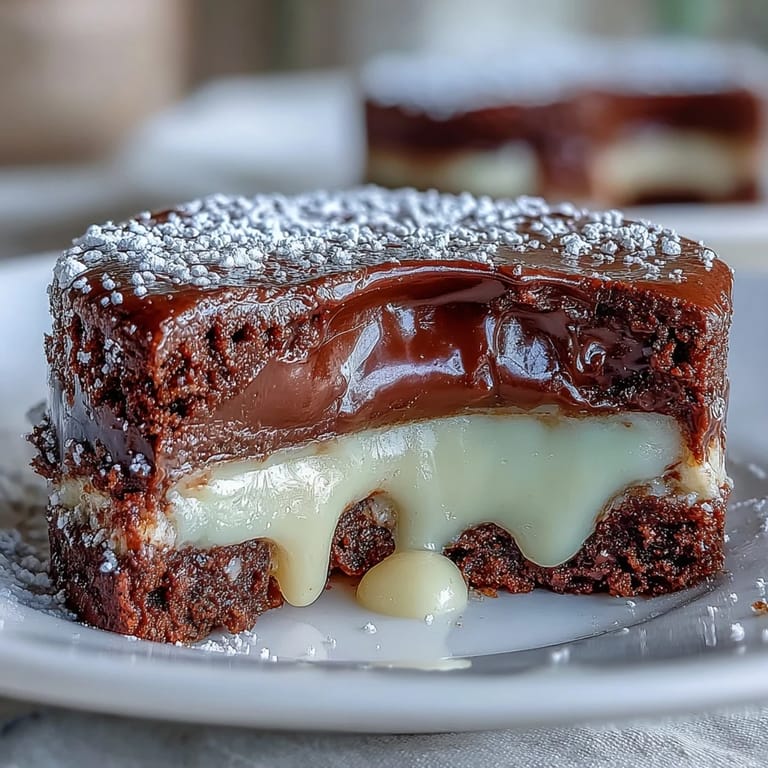
Save These hojicha lava cakes became something I reach for when I want to make someone feel seen, when a regular dessert feels too ordinary for the occasion. There's real magic in that moment when the warm hojicha ganache spills across the plate, and it's a magic you can absolutely create in your own kitchen.
Cooking Guide
- → What is hojicha?
Hojicha is a Japanese roasted green tea with earthy, nutty flavors and lower caffeine content than other green teas. Its roasted profile pairs beautifully with white chocolate's sweetness.
- → How do I know when the cakes are done?
The edges should be set but the centers still slightly jiggly when gently shaken. This ensures the molten lava effect. Overbaking will result in fully cooked centers without the flowing ganache.
- → Can I make these ahead of time?
Yes! Assemble the cakes in ramekins and refrigerate for up to 24 hours before baking. Add 1-2 minutes to baking time if baking from chilled. The ganache balls can also be frozen for longer storage.
- → What can I substitute for hojicha powder?
Matcha powder works well for a vibrant green tea variation. Alternatively, use finely ground roasted coffee or skip the powder entirely for pure white chocolate lava cakes.
- → Why did my lava cakes lose their molten center?
This usually means they were overbaked. Every oven varies, so start checking at 11 minutes. The centers must remain jiggly when removed from the oven as residual heat continues cooking them.
- → What should I serve with hojicha lava cakes?
Unsweetened whipped cream or crème fraîche balances the sweetness beautifully. Fresh berries, vanilla bean ice cream, or a drizzle of salted caramel also complement the roasted tea notes.